Rogers Pass Avalanche
March 4, 1910
On the evening of March 4, 1910, a crew of more than 60 men was working to clear the Canadian Pacific Railway line at the summit of Rogers Pass. An avalanche had come down the slopes of Mount Cheops, burying the main line and stopping a passenger train just east of that point. The slide was one of many that came down throughout the Pacific Northwest during a storm cycle that lasted more than ten days.
The men worked hard alongside a rotary snowplow that cleared a deep trench through the debris. The men worked within the trench with shovels, clearing the snow from the tracks.
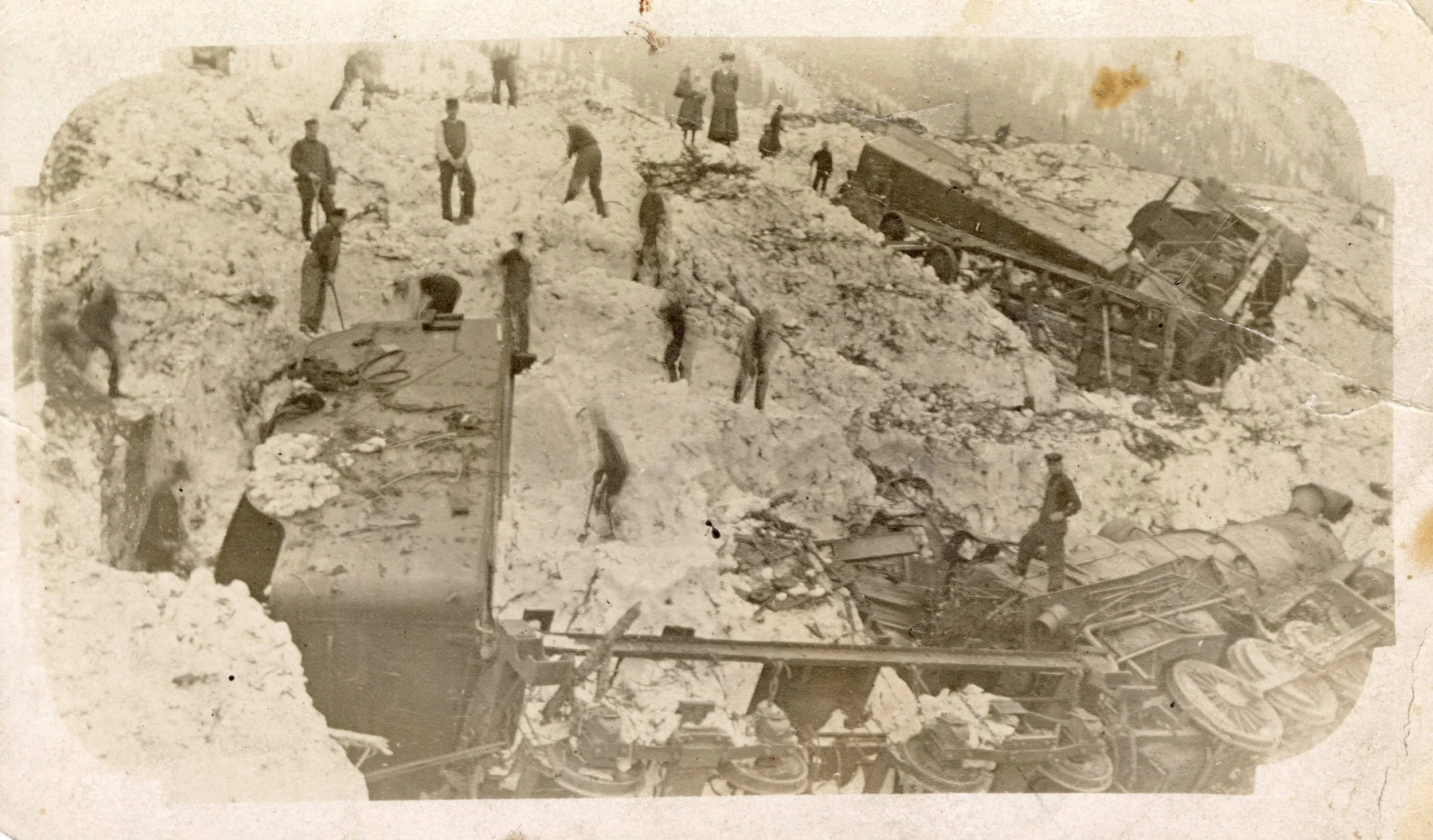
Clearing the aftermath of the Rogers Pass snowslide, 1910. P-1250.
Just before midnight, the roadmaster in charge of the crew, John Anderson, walked a short distance to make a call to Revelstoke with the message that the line would soon be clear. He came back to discover that a deadly slide had come from the opposite side of the valley, off the slopes of Avalanche Mountain, burying his crew.
“I found the Rotary pitched on top of the shed. Everything was in darkness and the wind blowing hard and 58 men buried in the slide.” His younger brother Charles Anderson was among the dead.
A total of 58 men died in this tragic event, including 32 labourers from Japan. The Japanese crew members were all under contract by the Nippon Supply Company, who managed Japanese workers for Canadian labour markets, including railway and sawmill work. A map of the locations where the 58 bodies were recovered can be found at the bottom of this page.
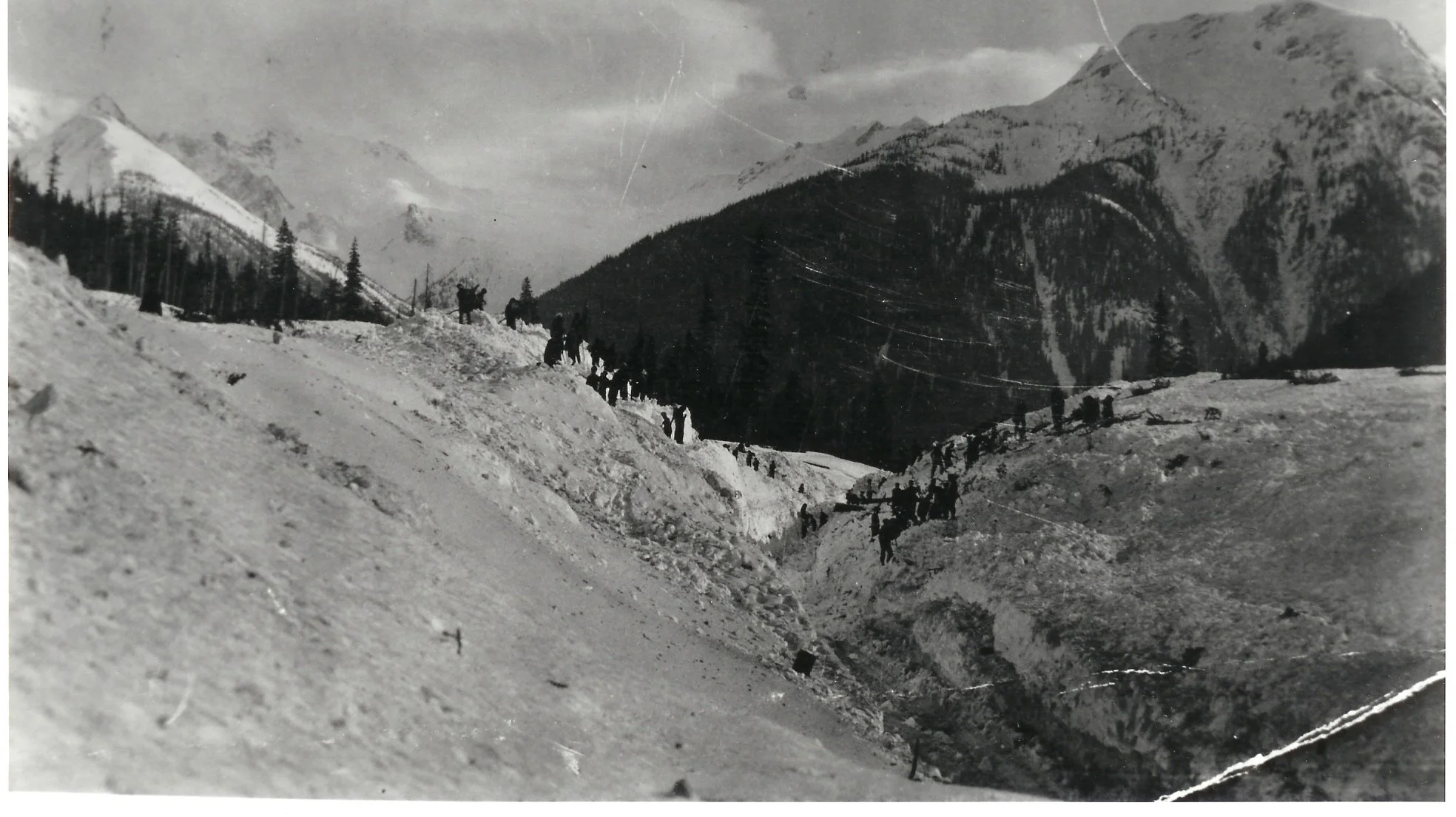
Aftermath of Rogers Pass snowslide, 1910. P-2511.

Rotary Plow clearing debris from Rogers Pass snowslide, 1910. P-2544.
Many of the men were working inside the cut created by the rotary snowplow, and they had no chance to escape. A strong wind and blizzard may have muffled the sound of the approaching danger. Many of the men were found as they had stood in their last moments – shoveling the snow, smoking a pipe, or holding a lantern. Another group of men, two Japanese and one Caucasian, were found huddled together, as they realized at the last moment that the avalanche was upon them.
The bodies of all 32 Japanese workers were sent to Vancouver for burial in Mountain View Cemetery, under the auspices of the Nippon Supply Company. They were sent a few at a time, as the bodies were recovered. The funeral service for the first eight of the Japanese victims to be recovered was held on March 12, 1910 at the Buddhist Church on Alexander Street in Vancouver, presided over by Bishop Sasaki. Hundreds of people attended the funeral, including Consul General Mr. Yata, as well as bereaved families, Canadian Japanese Association representatives, and reporters. Bishop Sasaki recited a sutra, after which Motoharu Kodama, representing the Nippon Supply Company, expressed his condolences.
Several more services took place as the bodies were recovered and sent to Vancouver. The final service was held on April 21, 1910, after the body of Genichi Tsuboi was recovered, six weeks after the avalanche took his life.
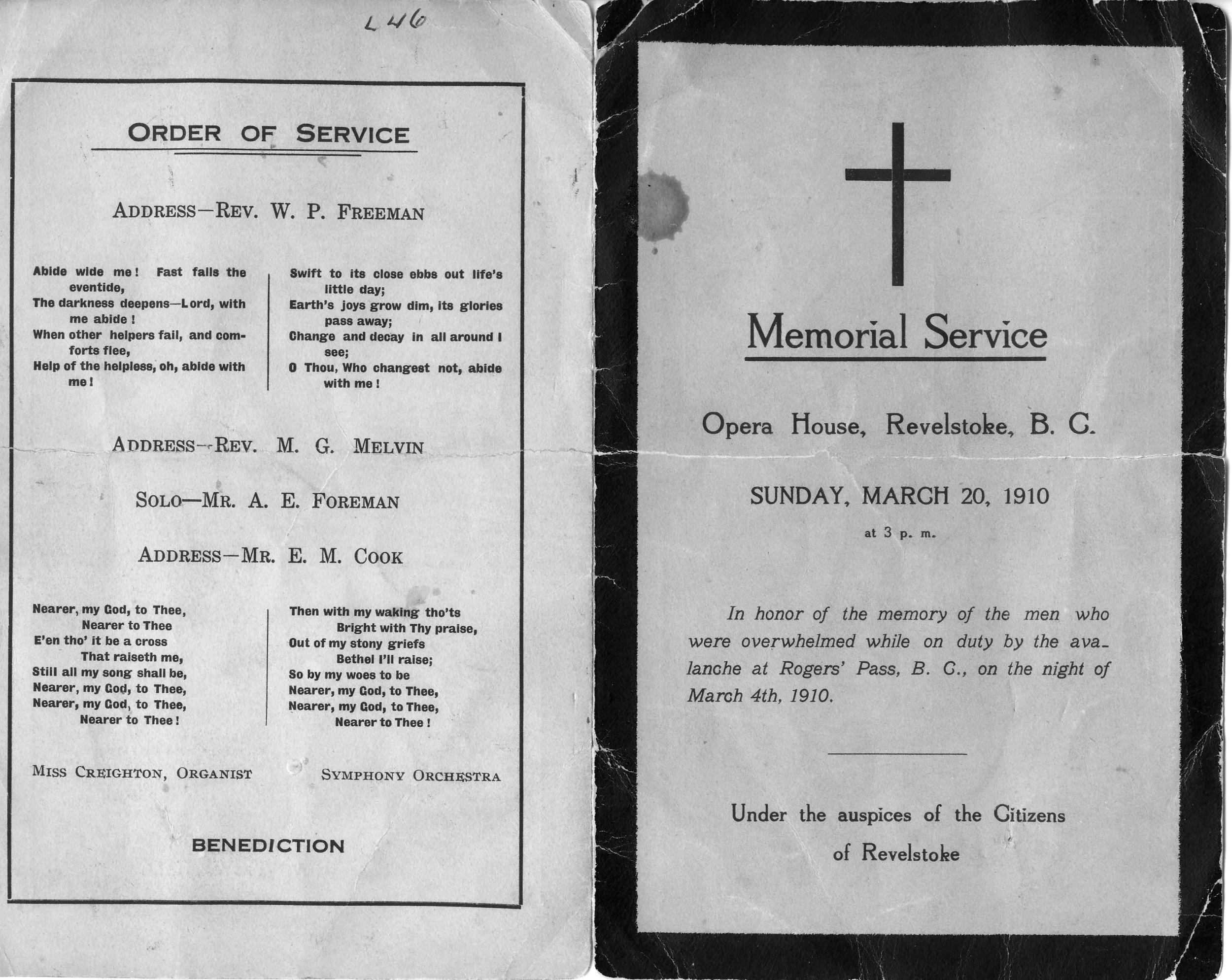
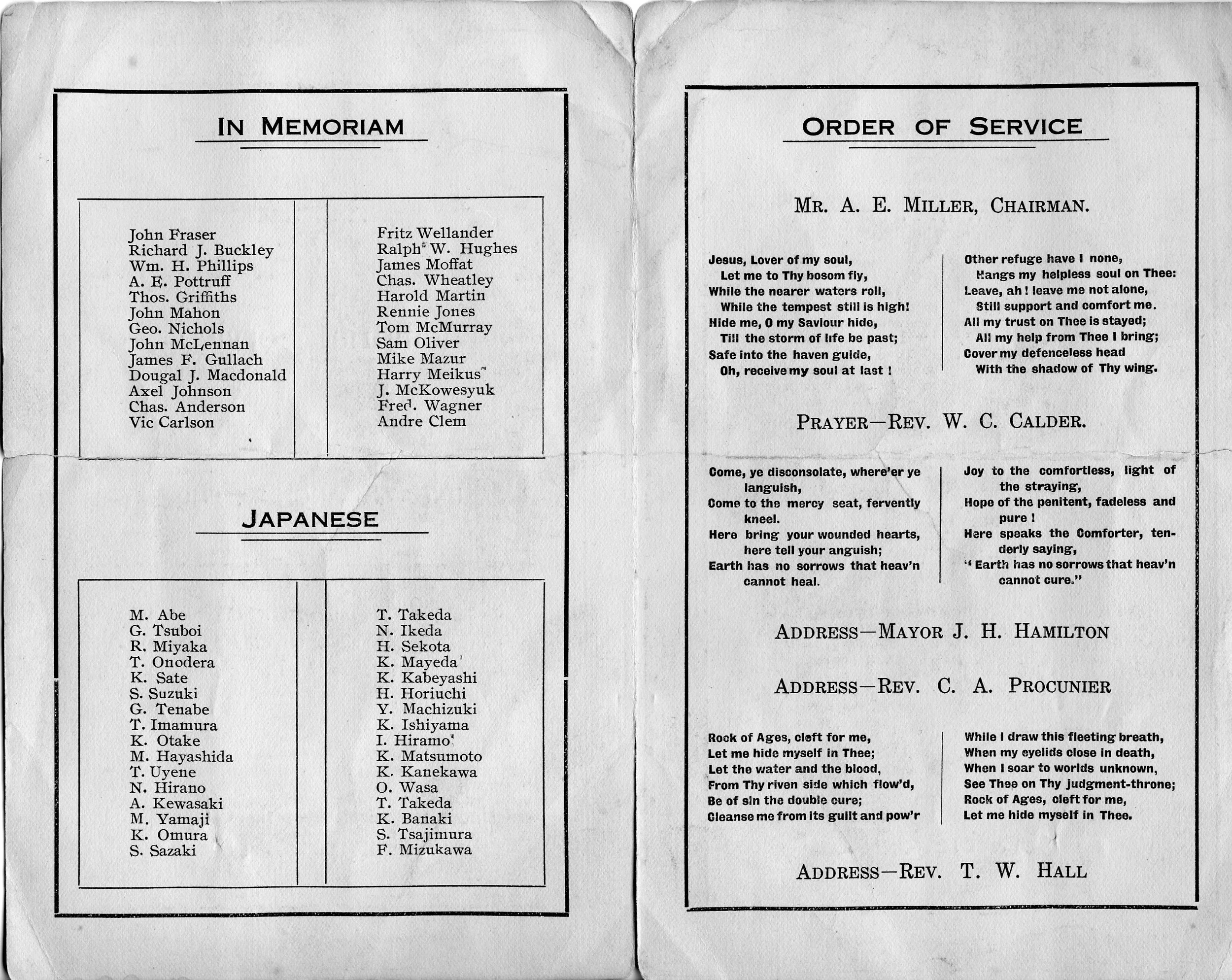
On March 20, 1910, a community-wide memorial service took place in Revelstoke at the Revelstoke Opera House on Second Street West. It was a Christian service, with prayers and addresses offered by the Anglican, Methodist, and Presbyterian ministers, and Christian hymns. The program included the names of all of the victims, although the Caucasian victims and Japanese victims were listed separately.
On April 24, 1910, the Buddhist Church in Vancouver held a 49th Day Memorial Service for all of the Japanese men who died in the March 4th Avalanche.
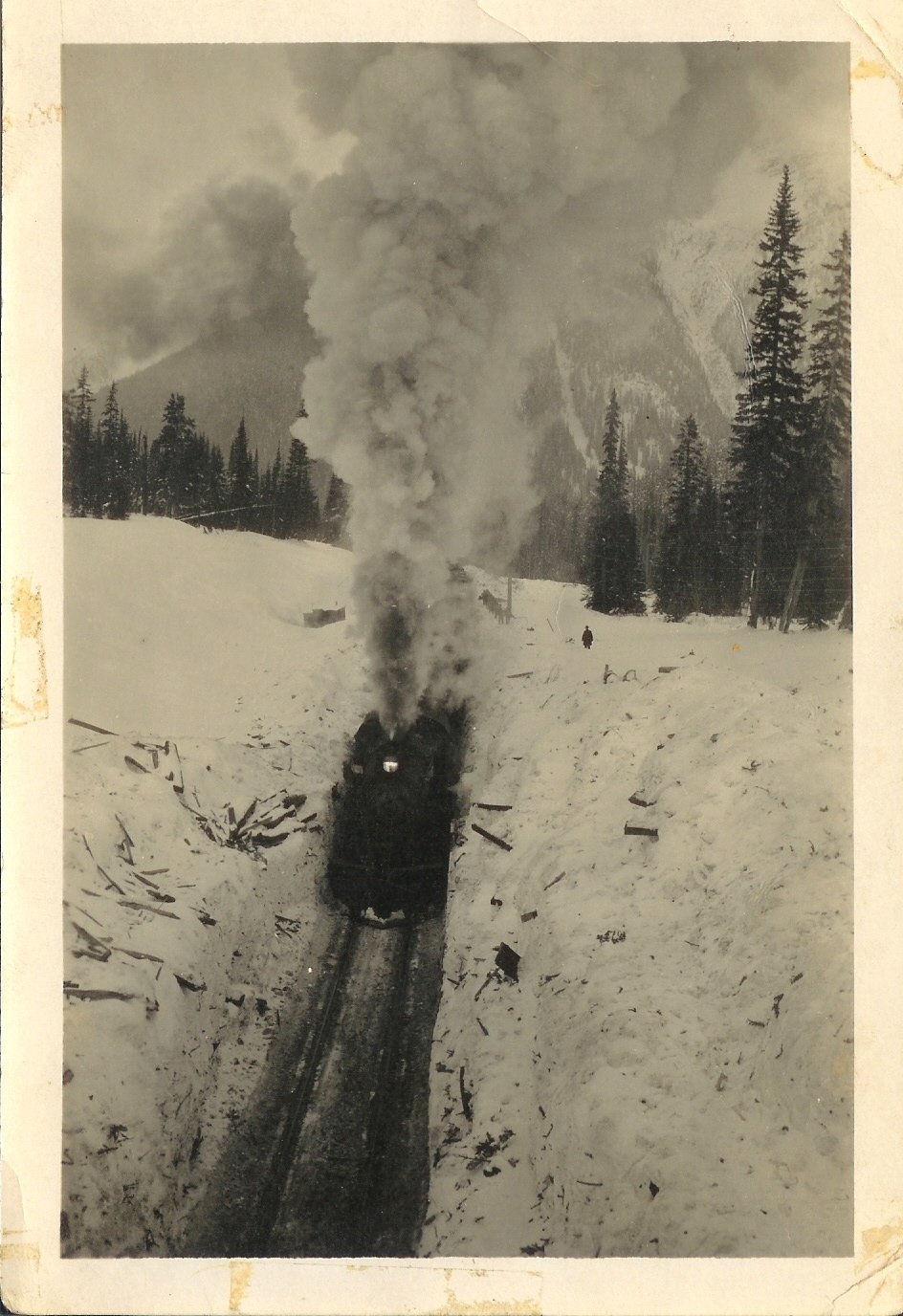
Train through cut path after Rogers Pass snowslide, 1910. P-432.
100 years after the tragedy, on March 4, 2010, a Commemorative Memorial service was held in Grizzly Plaza, in downtown Revelstoke. More than 800 people attended the service to remember the long-ago tragedy. The service this time included both Christian and Buddhist elements, with Bishop Orai Fujikawa of the Vancouver Buddhist Temple leading a Buddhist chant. Members of the Yamaji family attended from Japan to honour their great uncles, Mannosuke Yamaji, and Hikohachi Sakoda, two of the victims of the slide. Japanese Consul General Masasuke Ikeda gave an address at the gathering. More than 10,000 origami cranes were hung in the plaza, made by people in Revelstoke, across Canada, and even in Japan. Several local organizations were involved in the commemoration, and they were greatly aided by the research work of Tomoaki Fujimura, a recent immigrant from Japan who has spent hundreds of hours tracking the history of the Japanese workers at the 1910 incident, and beyond. Yuko Fujimura spearheaded the origami crane project and taught Revelstoke schoolchildren, seniors, and many others how to make the cranes.
Two more memorials were held in 2010. Mountain View Cemetery in Vancouver had cleaned all of the graves of the 1910 avalanche victims and hired an artist to create brass markers featuring the image of an origami crane for each of the grave sites. Another memorial was held at Rogers Pass, the actual site of the avalanche, on August 15, 2010, under the auspices of Parks Canada. Members of the Abe family, the Kumagai family, and the Imamura family visited from Japan and took part in both the Vancouver and the Rogers Pass ceremonies. That evening, on the banks of the Columbia River, a Toro Nagashi Lantern Ceremony took place, when 58 lantern boats were placed in the river. Each lantern carried the name of one of the victims, and carried the prayers and blessings of the people watching. A flutist standing on the banks added a musical offering to the ceremony. The community had given their final blessing to the victims of the tragic event.
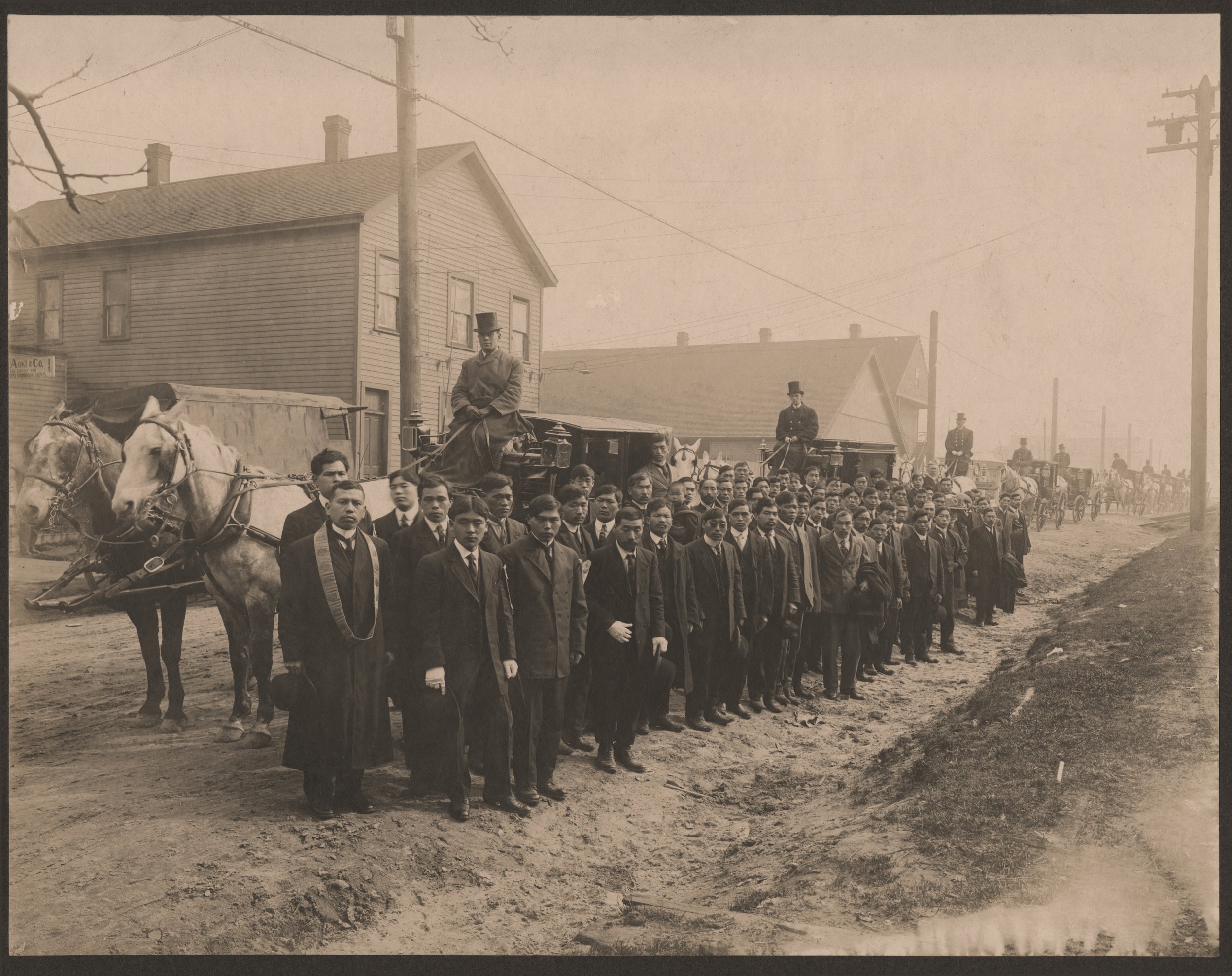
Abe Masatora funeral, 1910.
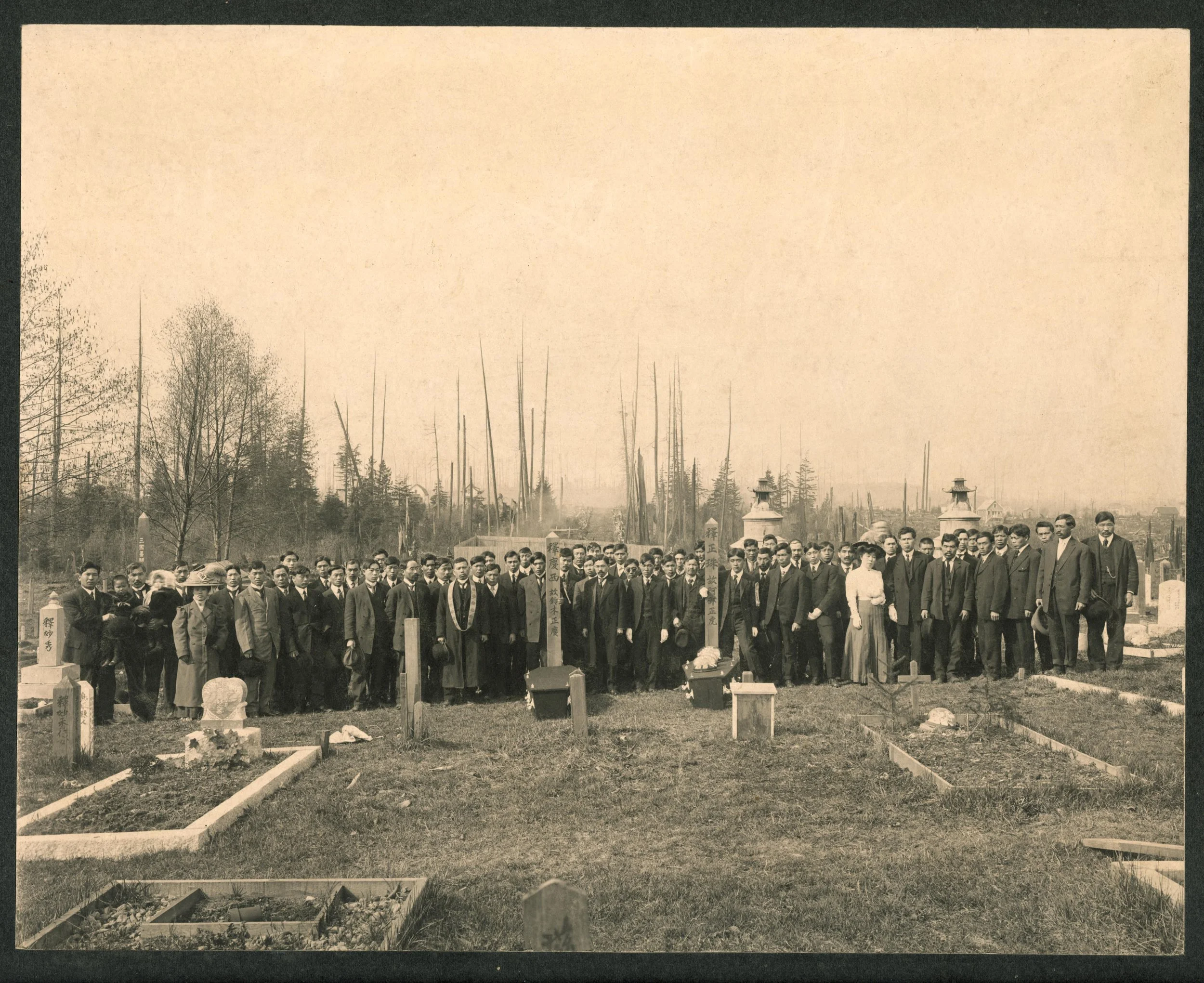
Abe Masatora funeral, 1910.
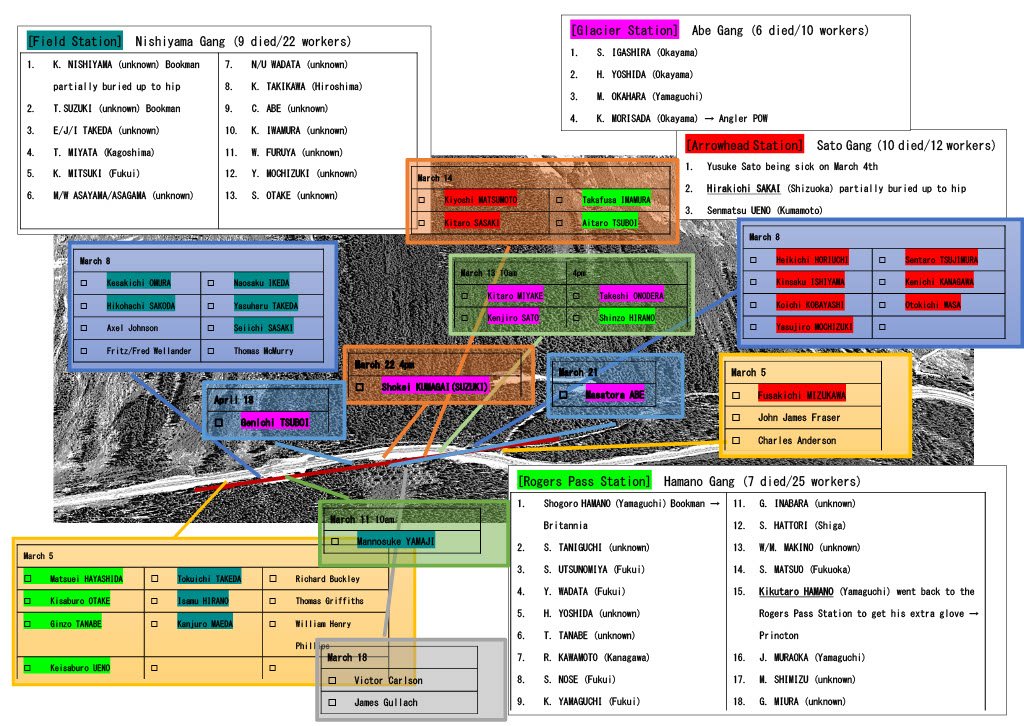
Map showing the locations that the Japanese 1910 snowslide victims were recovered from, and dates of recovery.